


Wireless technology is everywhere, overwhelming, in the heart of every IT architecture, and this is for many reasons: increase of user mobility, ease of network operation, scalability in deployment, enabling of localisation services, user and equipment presence detection, etc.
A littre introduction
It is a fact that the technology supports a wide range of applications and services and necessarily requires the integration of multiple protocols and standards such as : WIFI, LTE, ZIGBEE, BLUETOOTH, which is a complex task if we take into account these major issues :
- incompatibilities in between vendor systems,
- limited ISM available radio bandwidth,
- interference management and noisiness of the available channels,
- quality of service and security of this type of networks,
- the upgrade and evolution of such complex multi technology networks.
Why this book
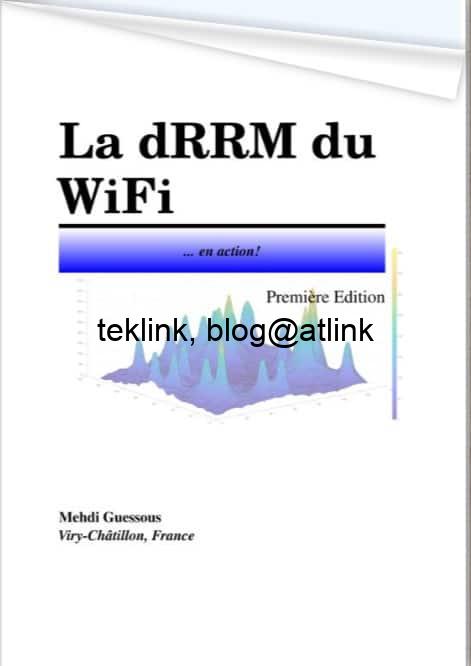
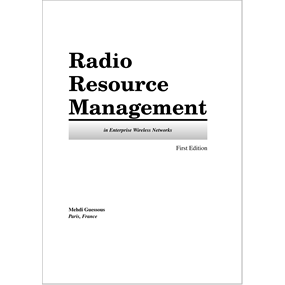
With regards to these issues, we aim through this book, available here: https://www.coollibri.com/bibliotheque-en-ligne/mehdi-guessous/radio-resource-management_830413, to contribute at enhancing the way conceiving and building such networks is done in the context of enterprises acting in different domains ( transportation, retail, finance and so on) in a multi-technology and multi-vendor environments, with an added IT value services and applications.
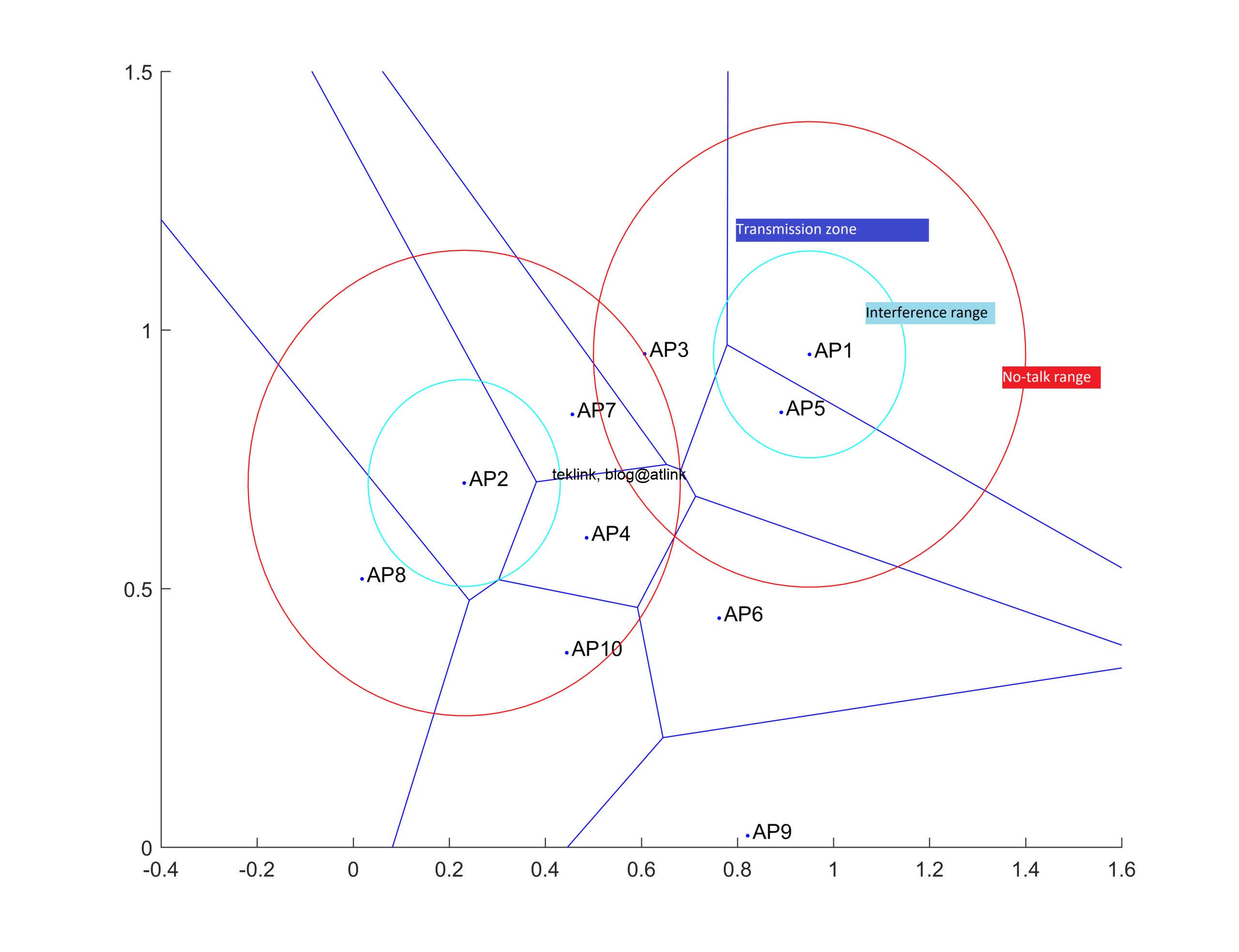
This work focuses on the major and central architecture component that is RRM or Resource Radio Management especially in the 2.4GHz radio band, in the context of Wireless Local Area Network, WLANs, as specified in the 802.11 IEEE’s standard; Nevertheless, this work is not exclusive to the 2.4GHz band but easily expandable to 5GHz and 6GHz radio bands where WLAN users are not subject to the same amount of interference and noise. Then this study focuses on the RRM in the context of the most challenging radio condition that is the 2.4GHz radio band in a Enterprise WLAN.
In addition to managing the complexity of such communication environments, dynamization of the radio resource management, that is RRM, allows such architectures to scale and adapt to highly changing radio interface and to bring a definite advantage to other business application in domains such marketing, operation, etc.; In this study, we develop this procedure of RRM dynamization.
In summary
In the first part we discuss RRM in the context of Enterprise WLANs from two points of view : vendor implementation, and research thinking on how to manage radio resources. From there, the second part introduces a new way of thinking the coverage, taking into consideration many new facts that characterizes the radio interface in such networks such as : beamforming. In the third and fourth parts, we present two enhancement proposals to our coverage modelization and RRM solution that make it more competitive with vendor ones or at least as a foundation to any of these solutions further development for design purposes. In the last part, we present an alternative approach to the first one based on Machine Learning, ML, concepts.
In each part we put the corresponding and related articles…